If your content gets views, saves, comments, and even “Where did you get that?” questions, but still does not generate meaningful revenue, the problem usually is not reach. It is structure. Consumers are already discovering products on social platforms, and they already trust creator recommendations more than many brands realize. Deloitte found that 61% of consumers discovered a new brand or product on social media in the past 12 months, 46% say customer reviews make them more likely to purchase on a social platform, and 83% say the creators they follow are trusted sources of information. Yet the same report says brands are only meeting 69% of their social media business objectives on average.

That gap is where most content fails. It creates interest, but it does not help people choose. Shopday is built for that exact problem. On its homepage, Shopday says it turns content into high-performing comparison experiences that automatically update, optimize, and earn more revenue. Its publisher terms say the platform monetizes content through context-aware comparison tables and related placements based on user intent, available offers, and performance signals.
The real reason your content is not converting
Most underperforming content is doing the top half of the job well enough. It gets attention, builds trust, and creates curiosity. What it fails to do is support the decision moment.
That is the point where someone is no longer just consuming your content. They are comparing, hesitating, checking alternatives, and looking for reassurance. Shopday’s Media Kit puts it simply: shoppers compare before buying, and that comparison moment is where decisions are actually made. It also says people do not discover brands randomly. They discover them while reading reviews, comparing options, and checking alternatives.
So if your content is informative but not helping the reader act, it may feel strong editorially while still underperforming commercially.
Mistake 1: There is no clear purchase intent in the page structure

A lot of creators and publishers publish content that mentions products without building around the actual buying question.
For example:
- “My current skincare routine”
- “Favorites from this month”
- “My desk setup”
- “Travel essentials I always pack”
All of those can create interest. But they often fail to convert because the reader’s real question is more specific:
- Which one should I buy first?
- What is the best value?
- Is there a cheaper alternative?
- Which one is best for my use case?
Shopday’s homepage says its system scans content, detects commercial intent, and builds dynamic tables that match exactly what users want to compare. That is the missing layer in a lot of otherwise strong content.
What to fix
Rewrite or expand content around decision-led angles such as:
- best option
- budget vs premium
- alternatives
- best for beginners
- worth it or skip it
That does not mean changing your voice. It means making the content easier to act on.
Mistake 2: Your links are placed where intent is weakest
A common conversion killer is not the link itself. It is where the link appears.
A lot of content still relies on:
- one generic “link in bio”
- one product link buried at the bottom
- a crowded landing page with too many choices
- a homepage link when the user wanted a specific recommendation
If someone is already close to buying, friction matters. Deloitte found that 34% of consumers would be more likely to purchase on social platforms if the process were even easier.
What to fix
Place links where the decision is happening:
- right after the recommendation
- inside a comparison block
- after a “best for” section
- beside a budget or alternative option
- near the conclusion when the reader is ready to act
The closer the link is to the moment of confidence, the better your odds of conversion.
Mistake 3: You are offering one link for a comparison problem
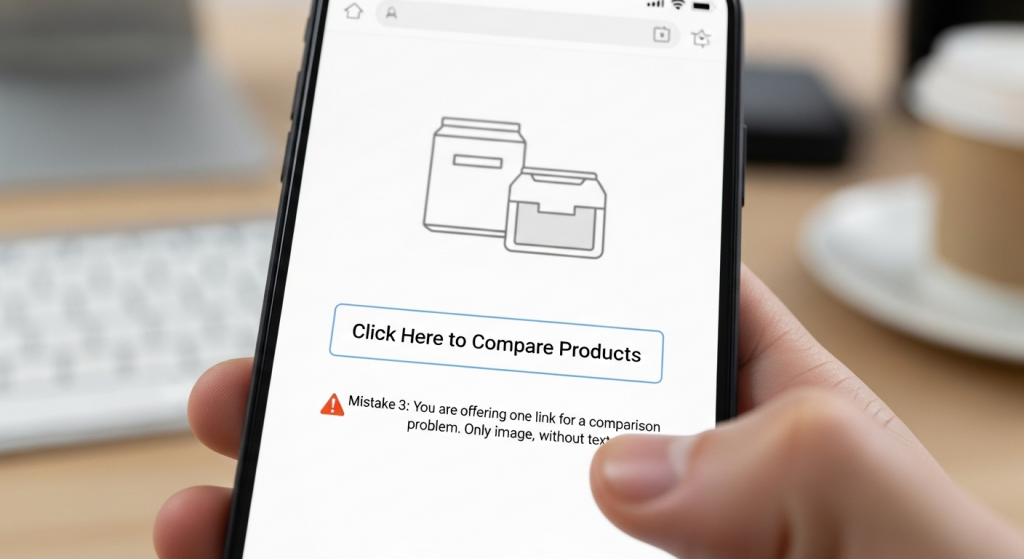
Many creators publish content as if the audience wants a single answer. In reality, the audience often wants help evaluating options.
That is why comparison content works so well. Shopday’s Media Kit says people do not buy the first thing they see. They compare, hesitate, and look for reassurance. It also says Shopday places brands alongside the options shoppers are actively evaluating, not before and not after.
If your content says “here is what I use,” but the audience is really asking “which one is right for me?”, one standalone link usually underperforms.
What to fix
Add comparison structure:
- best overall
- best budget pick
- best premium pick
- best alternative
- best for a specific need
That kind of layout gives the reader a path to self-select, instead of forcing a one-size-fits-all answer.
Mistake 4: The click leads to a weak destination
Sometimes the post works. The link even gets clicked. But the page it leads to is too broad, too messy, or too disconnected from the original question.
This is where a lot of conversion gets lost.
Shopday’s Media Kit says it automatically inserts a contextual, easy-to-scan comparison table featuring brands, retailers, or specific products or services, and that the brand appears directly among the options shoppers are comparing, without manual setup or ongoing work.
That matters because a strong click path should feel like a continuation of the content, not a detour.
What to fix
Make sure the destination matches the exact promise of the content:
- a comparison page for a comparison topic
- a shortlist for a “best” topic
- an alternatives page for a switch-intent topic
- a product table for a research-heavy category
The landing experience should reduce uncertainty, not restart the decision from scratch.
Mistake 5: You are treating evergreen content like a one-time post
A lot of creators make the same monetization mistake over and over. They answer the same buying question in comments, Stories, or DMs without ever turning that demand into an evergreen asset.
That wastes intent.
If people repeatedly ask:
- Where did you get that?
- Which one do you recommend?
- Is there a cheaper option?
- Can you link it?
You already have the signal you need.
Shopday’s homepage says it updates comparison experiences based on offers, availability, and performance, so content can keep working without constant manual upkeep.
What to fix
Turn repeated questions into pages that can keep earning:
- best walking shoes for long shifts
- best carry-on bags for short trips
- best vitamin C serums for beginners
- best office chairs for small spaces
That is how content stops being a post and starts becoming an asset.
Mistake 6: You are not measuring the right signals
A post with strong likes and weak clicks might be entertaining, but it is not necessarily commercially strong. A quieter piece of content with better click quality may be far more valuable.
Shopday’s publisher terms say reporting can include page URL, sub-ID, device, country, clicks, and revenue, though earnings remain subject to validation and advertiser approval.
What to fix
Track signals that actually point to commercial value:
- repeated product questions
- link clicks by topic
- pages that keep earning after publication
- comparison posts that outperform general lifestyle posts
- posts that drive better quality traffic, not just bigger reach
The goal is not just more traffic. It is more qualified action.
What to fix first
If you only change one thing, fix the gap between recommendation and decision.
Start with the content that already has visible intent:
- posts that get “Where did you get that?” comments
- reviews and product roundups
- comparison-style content
- alternatives content
- posts that already generate clicks but weak revenue
Then do three things:
Clarify the buying question
Make the content answer a decision, not just share a mention.
Add a comparison layer
Give the reader a way to choose, not just browse.
Improve the click destination
Send them to a page that continues the recommendation naturally.
That sequence matters because you do not need more content first. You need a stronger path from trust to action.
Why Shopday is the fastest way to fix the problem

Shopday is useful because it solves the exact points where content usually breaks down.
It helps by:
- detecting commercial intent in content
- creating dynamic comparison tables automatically
- updating those tables based on offers, availability, and performance
- placing monetization inside real editorial environments
- helping users compare while they are still deciding
The Media Kit also makes a key point that fits this article perfectly: Shopday does not wait for the final click. It introduces brands before the decision is locked, when shoppers are still open to switching.
That is why Shopday works so naturally for creators and publishers. It does not ask you to become more aggressive. It helps your content become more useful at the moment people are actually choosing.
Do not ignore trust and disclosure

Even the best monetization structure will underperform if the audience feels misled. The FTC says creators need to make a good disclosure of their relationship to a brand, and that material connections, including payment or free or discounted products, should be obvious to the audience.
That matters because the goal is not to squeeze clicks out of trust. It is to support decisions without weakening credibility.
Conclusion: your content probably does not need more reach, it needs a better path
The real reason your content is not converting is usually not that the audience is wrong or the niche is weak. It is that the content stops at interest instead of guiding the choice.
Fix the first gap:
- make the buying question clearer
- place links where intent is strongest
- replace isolated links with comparison logic
- send readers to better destinations
- measure what actually drives revenue
Then let Shopday do what it was built to do. With context-aware comparison tables, dynamic updates, and intent-led placements, Shopday helps turn content that gets attention into content that actually converts.
The responses below are not provided, commissioned, reviewed, approved, or otherwise endorsed by any financial entity or advertiser. It is not the advertiser’s responsibility to ensure all posts and/or questions are answered.