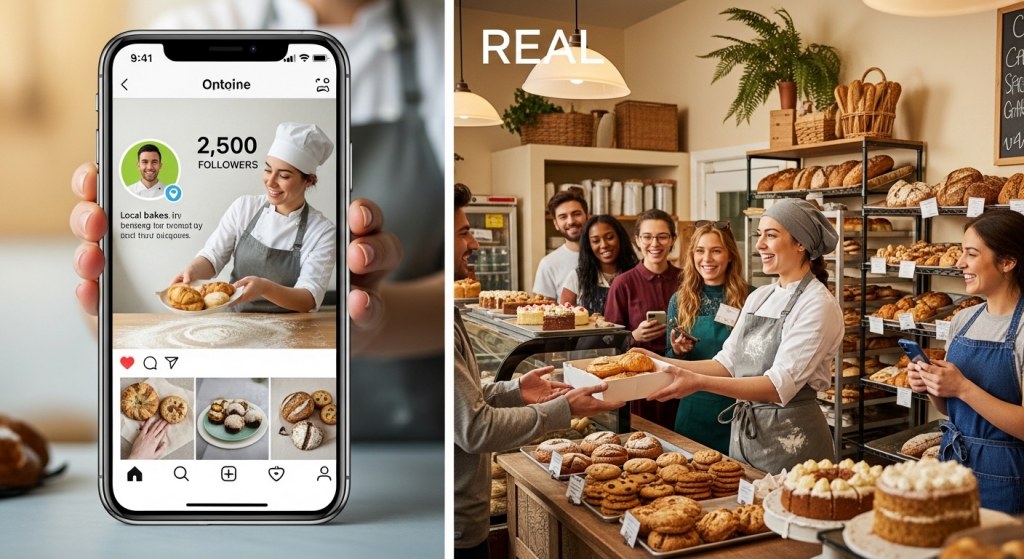
A thousand followers used to feel like a tiny number. In 2026, it can already be enough to access some of Meta’s newer affiliate features on Instagram. But the real opportunity is not just qualifying for a tool. It is learning how to publish content for people who are already close to buying. That matters because creator recommendations still influence purchase behavior: Morning Consult reports that 45% of social media users “often” or “sometimes” buy after seeing someone post about a product, and impact.com says relatable creators earn more trust while smaller creators often generate stronger engagement than large-scale influencer posts.

That is exactly why smaller accounts can monetize so well. You do not need celebrity reach if your content sits at the decision stage, where someone is comparing options, looking for reassurance, or searching for a better alternative. Shopday is built for that moment. Its media kit and site both frame the platform around comparison intent, dynamic tables, and higher-intent discovery, not random traffic or passive impressions.
Why smaller Instagram accounts often convert better

Big accounts are great at getting attention. Small accounts are often better at getting action.
That sounds backwards, but it makes sense. When your audience follows you for a specific reason, budget skincare, travel gear, work-from-home tools, dog nutrition, running shoes, they are not just watching for entertainment. They are watching because your opinion helps them make a decision. Impact.com reports that 60% of consumers trust creators who feel relatable and authentic, and says micro-creators can drive 2.4 to 6.7 times more engagement than large-scale influencer posts. Morning Consult also found that 56% of Gen Z and millennials still trust influencers when deciding whether to purchase products, even as trust overall has become more selective.
In other words, a smaller creator with the right audience can outperform a larger creator with the wrong audience.
The money is in purchase intent, not vanity metrics
If you want a smaller Instagram account to earn, stop asking, “How do I go viral?” and start asking, “What is my follower trying to buy right now?”
Purchase-intent content usually falls into a few clear formats:
- Best products for a specific problem
- Product A vs Product B
- Alternatives to a well-known brand
- Is it worth it? style reviews
- Where to buy, what to choose, and what to skip
- Budget picks, premium picks, and beginner picks
These formats work because they help a person move from interest to choice. That is also why Shopday’s positioning is so useful here. The platform is designed to turn content into high-performing comparison experiences that update automatically, optimize behind the scenes, and improve engagement and clickthrough without adding editorial workload.
What this looks like on Instagram in practice

A lot of smaller creators post attractive content but still make very little money because the post creates interest without creating direction.
Here is the difference:
| Weak monetization angle | Strong monetization angle |
|---|---|
| “My favorite running set this week” | “3 Lululemon alternatives that feel premium but cost less” |
| “Desk setup update” | “Best laptop stands for small desks, budget vs premium” |
| “Current skincare routine” | “The 4 products I’d rebuy first if I had to start over” |
| “Travel essentials reel” | “Best personal item bags for budget airlines, tested” |
| “Coffee content” | “Best espresso machine under $200, and who should skip each one” |
The second column works better because it matches how people actually shop. Shopday’s own materials make this same point: people do not discover brands randomly. They discover them while reading reviews, comparing options, and checking alternatives.
How to use Shopday to turn Instagram interest into revenue
Instagram is where attention starts. Your Shopday-powered destination is where conversion happens.
Send people to a decision page, not a generic homepage
If your Reel is about “best protein powders for sensitive stomachs,” do not send people to a general link hub with ten unrelated buttons. Send them to one page focused on that exact choice.
Shopday works by adding a lightweight script to your site, analyzing the content and visitor intent, and automatically surfacing the right type of comparison table for the topic, whether that is products, services, alternatives, or retailer lists.
That means your bio link, Story link, or pinned comment can lead to a page that feels like the natural next step from the Instagram post.
Let comparison tables do the heavy lifting

Small creators often make one big mistake. They ask followers to click before giving them enough clarity to choose.
Shopday solves that by generating dynamic comparison tables automatically and updating them based on offers, availability, and performance. Its media kit also says those tables are contextual, easy to scan, and built to appear directly among the options shoppers are comparing.
For a creator, that is powerful. Instead of writing a long caption full of scattered links, you can say:
- “I compared the top 3 here”
- “Tap the link in bio for the full breakdown”
- “I added the budget, best overall, and premium pick on one page”
That is a much easier path to conversion than dropping followers into a generic storefront.
Use smarter linking, not just more links
Basic smart-link tools still leave a lot of manual work on the publisher side. Shopday explicitly positions itself as going further by automating merchant discovery, payout evaluation, geo-aware ranking, replacing paused or low-paying programs, alternatives generation, performance optimization, and real-time yield maximization.
For smaller creators, that matters because time is limited. You should be creating content, not constantly fixing broken links, swapping merchants, or rebuilding old posts every time a commission changes.
Look at conversion signals, not just likes
A small account can look “quiet” on the surface and still make money well above its size if the clicks are qualified.
Shopday’s media kit says clicks, conversions, and revenue can be traced back to the exact page and placement, with full transparency and fraud filtering built in. That kind of visibility helps you identify which topics actually produce commercial results.
That gives you a much better growth loop:
- Publish a Reel or carousel around a buying question
- Send traffic to a focused Shopday page
- Review which posts drove the best clicks and revenue
- Make more content on the same commercial angle
That is how smaller accounts become profitable without needing huge reach.
Three practical examples
Fitness creator, 3,200 followers
Instead of posting “gym favorites,” post: “Best Lululemon alternatives for leg day, ranked by feel, support, and price.”
Then send followers to a Shopday-powered comparison page with:
- Best overall
- Best budget pick
- Best for compression
- Best for hot weather
This works because it targets a buyer who is already comparing options and is open to switching brands, which is one of the exact decision-stage moments Shopday highlights in its media kit.
Home office creator, 5,800 followers
Post a Reel called: “Best desk lamps for late-night work, warm light vs bright task light.”
On the landing page, use a comparison table that separates:
- Best for eye comfort
- Best for aesthetics
- Best under a set budget
- Best for small desks
This creates a straight line from Instagram curiosity to a buying decision, which is where Shopday says comparison intent lifts engagement and clickthrough.
Travel creator, 8,900 followers
Create a carousel: “Best personal item bags for Ryanair and easyJet, tested by packing style.”
Then link to a page with:
- Bag dimensions
- Capacity
- Laptop sleeve or not
- Best for weekend trips
- Best for strict budget airlines
This is high-intent content because the follower is not browsing casually. They are trying to solve a near-term buying problem.
The compliance piece creators cannot ignore
Monetization only works long term if followers trust you.
The FTC says influencers and endorsers need to disclose material connections with brands clearly, and Instagram’s help pages say branded content must be disclosed with the paid partnership label and must follow monetization policies.
So if you are using affiliate links, gifted products, or paid partnerships:
- disclose the relationship clearly
- do it where people will actually see it
- do not make your recommendation sound neutral if you are compensated
- keep the content honest and specific
That is especially important for smaller creators because trust is your real leverage.
The biggest mistake small creators make
They try to monetize broad lifestyle content before they build a clear commercial angle.
A smaller account earns faster when it becomes known for helping followers choose, compare, and buy with confidence. That is where Shopday fits naturally. Its platform is designed to help publishers and site owners monetize decision-stage content with dynamic comparison tables, automated optimization, and performance visibility across evergreen content.
So no, you do not need 100,000 followers to start making money from Instagram.
You need a focused niche, content built around purchase intent, and a better bridge between social attention and conversion. Instagram can spark the click. Shopday can help turn that click into a smarter comparison experience, better-qualified traffic, and more revenue from the content you are already creating.
Conclusion: small audience, serious buying power
If your account has more than 1,000 followers, you are not “too small.” You are at the perfect stage to build a monetization system around trust, niche relevance, and buyer intent.
The creators who win are not always the loudest. They are the clearest. They help people decide.
And when your Instagram content sends followers to focused pages with smarter links, dynamic comparison tables, and measurable performance, Shopday gives you a much better chance of turning that trust into clicks, conversions, and long-term revenue.
The responses below are not provided, commissioned, reviewed, approved, or otherwise endorsed by any financial entity or advertiser. It is not the advertiser’s responsibility to ensure all posts and/or questions are answered.